
Quick Answer
The ideal arrowhead plant fertilizer schedule follows the plant’s natural growth cycle. Feed your Syngonium once every 4 to 6 weeks during the spring and summer (growing season). Use a balanced, water-soluble liquid fertilizer diluted to half-strength to prevent root burn. In the fall and winter, stop fertilizing entirely as the plant enters a dormant phase. For variegated varieties, consistent feeding is essential to maintain vibrant leaf patterns and prevent the plant from reverting to plain green.
I remember the first time I brought home a “Neon Robusta” arrowhead plant. It was a stunning, dusty pink, and I was determined to make it the centerpiece of my home office. For the first three months, it was perfect. Then, I got overzealous. I thought, “If a little fertilizer is good, more must be better, right?”
I started feeding it every two weeks with full-strength plant food. Within a month, the vibrant pink leaves turned a sickly yellow, and the edges looked like they’d been singed by a lighter. I had committed the classic “beginner’s burn.” That failure taught me more about arrowhead plant nutrition than any textbook ever could.
The truth is, these plants (scientifically known as Syngonium podophyllum) are incredibly communicative. They will tell you exactly what they need, but you have to know how to listen—and more importantly, when to put the fertilizer bottle down.
Understanding Arrowhead Plant Nutrition Needs
Before we dive into the calendar, we need to understand what these tropical climbers actually eat. Like most houseplants, they crave a balance of Nitrogen (N), Phosphorus (P), and Potassium (K).
- Nitrogen: The engine for those iconic arrow-shaped leaves.
- Phosphorus: Essential for strong root systems.
- Potassium: The “immune system” booster that helps the plant resist pests.
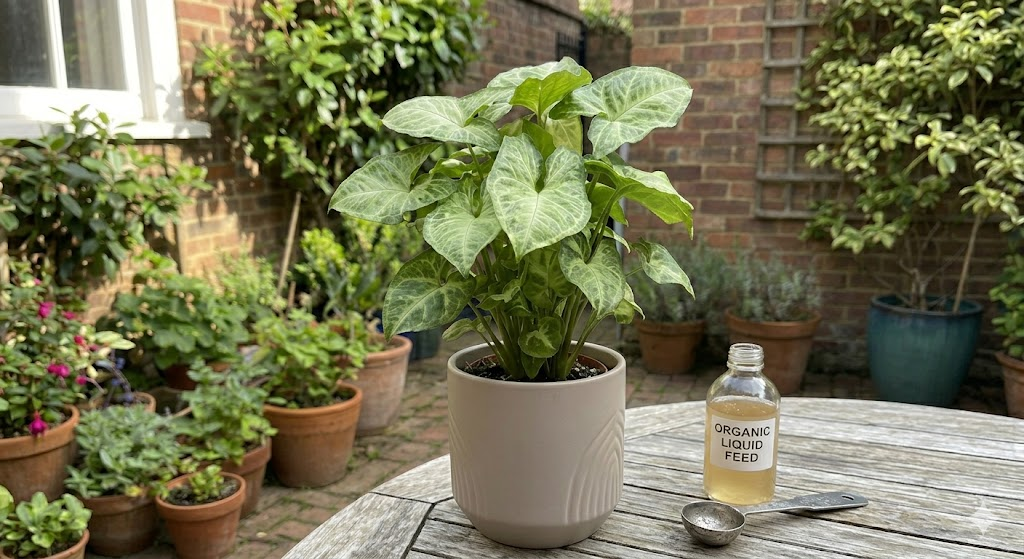
In my experience, the best arrowhead plant fertilizer for growth is one that doesn’t overwhelm the delicate root hairs. Because Syngoniums are often grown in pots where salts can build up, the arrowhead plant fertilizer type you choose makes a world of difference.
The Seasonal Arrowhead Plant Fertilizer Schedule
Timing is everything. If you feed a sleeping plant, you’re not helping it; you’re essentially “choking” the soil with minerals it can’t use.
Spring and Summer: The “Go” Phase
This is when your plant is pushing out those beautiful new vines.
- Frequency: Every 4 to 6 weeks.
- Method: Use a best liquid fertilizer for arrowhead plant diluted to 50% strength.
- Pro Tip: I always water my plant thoroughly before adding fertilizer. Applying fertilizer to bone-dry soil is a recipe for root shock.
Fall: The “Slow Down” Phase
As the days get shorter, the plant’s metabolism slows.
- Frequency: Once every 8 weeks, or stop entirely if you live in a colder climate where indoor light drops significantly.
- Observation: You’ll notice the arrowhead plant feeding response slows down; new leaves will take longer to unfurl. This is normal!
Winter: The “Dormant” Phase
Stop fertilizing. Seriously. Between November and February, your arrowhead plant plant food schedule should be empty. Adding nutrients now can lead to salt toxicity and “leggy” growth that is weak and prone to aphids.
Choosing the Best Fertilizer for Arrowhead Plant
Not all “plant food” is created equal. Depending on your lifestyle and your plant’s specific variety, you might prefer different delivery methods.
1. Liquid Fertilizers (The Gold Standard)
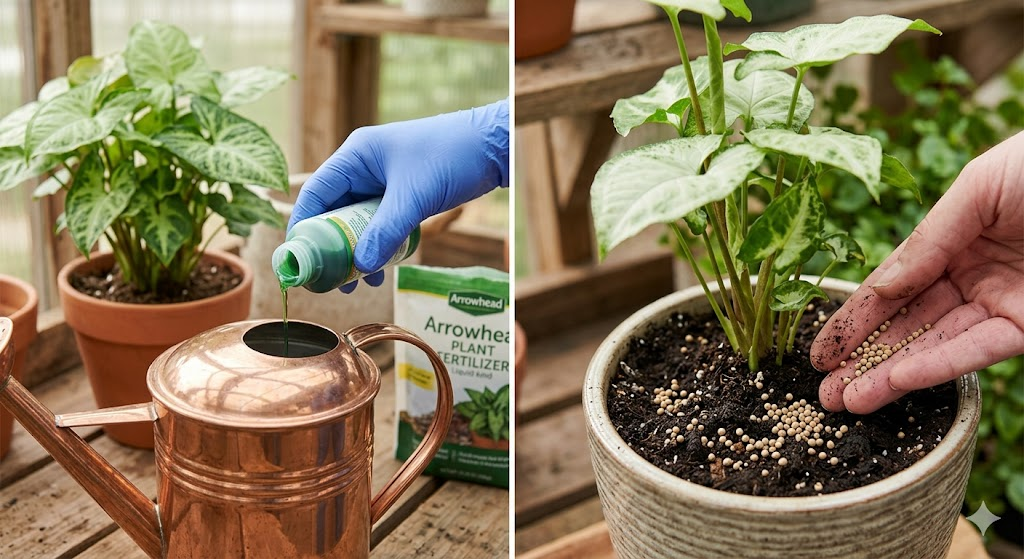
For most enthusiasts, a liquid concentrate is the best arrowhead plant fertilizer for beginners. It’s easy to control the arrowhead plant fertilizer amount. I personally use a balanced 10-10-10 or a 20-20-20 formula, but I always cut the dosage in half.
2. Slow-Release Pellets
If you’re the “set it and forget it” type, the best slow release fertilizer for arrowhead plant is a granular option. You sprinkle it on the soil once at the start of spring, and it feeds the plant for 3 to 6 months.
- The Risk: It’s harder to stop the feeding if your plant shows signs of distress.
3. Organic Options
If you want to keep things natural, the best organic fertilizer for arrowhead plant is often fish emulsion or liquid seaweed. Warning: fish emulsion smells like a pier at noon, but the plants love it. It provides a gentle, low-NPK boost that is very safe for the roots.
Special Care: Fertilizing Variegated Varieties
If you own a “White Butterfly” or an “Albo,” you know the struggle of maintaining that crisp white variegation. The best arrowhead plant fertilizer for variegated types is one that is slightly lower in nitrogen.
My Lesson Learned: I once over-fed a variegated Syngonium with a high-nitrogen “growth booster.” Within two months, the beautiful white patches started turning green. The plant was producing more chlorophyll to keep up with the forced growth. To keep those colors popping, stick to a strictly balanced formula and ensure the plant gets plenty of bright, indirect light.
Troubleshooting: Signs of Fertilizer Issues
Knowing your arrowhead plant fertilizer routine is only half the battle. You have to recognize when the routine isn’t working.
| Symptom | Potential Cause | The Fix |
|---|---|---|
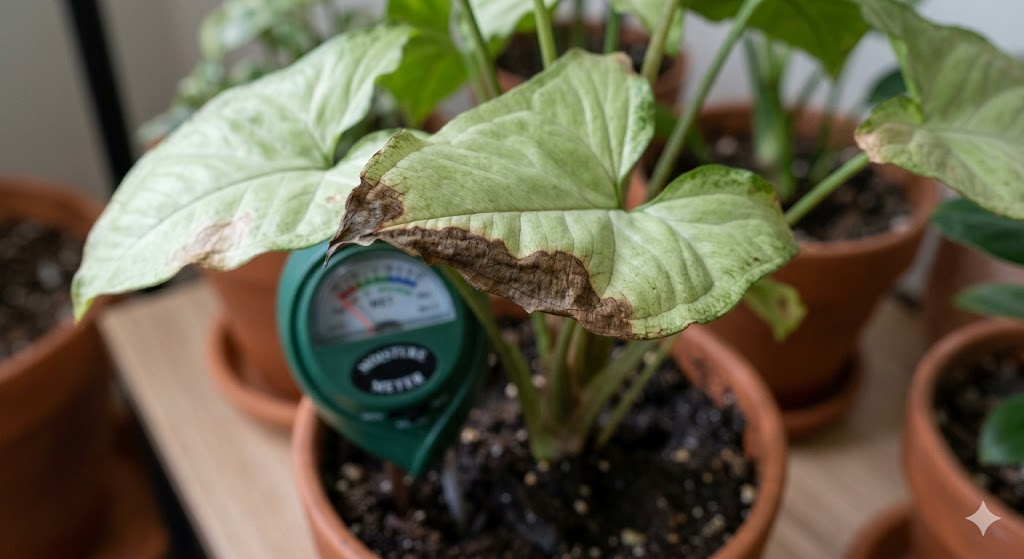
| Brown, “crispy” leaf tips | Fertilizer burn (Salt buildup) | Flush the soil with distilled water for 5 minutes. |
| Rapid yellowing of lower leaves | Over-fertilizing or Over-watering | Stop feeding and check for root rot. |
| Very small new leaves | Nutrient deficiency | Increase arrowhead plant fertilizer frequency slightly. |
| Stunted growth in Spring | Lack of Phosphorus/Potassium | Switch to a balanced best arrowhead plant fertilizer for indoor use. |
Step-by-Step: How to Fertilize Like a Pro
- Check the Soil: Ensure the top inch is dry, but the root ball isn’t a desert.
- Water First: Give the plant a light drink of plain water.
- Mix the Solution: Take your best liquid fertilizer for arrowhead plant and mix it at half the recommended bottle strength.
- Apply Evenly: Pour the solution around the base, avoiding the leaves (which can cause spotting).
- Drainage is Key: Ensure the excess liquid drains out the bottom. Never let your Syngonium sit in a saucer of fertilizer water.
Advanced Tip: The “Flush” Method
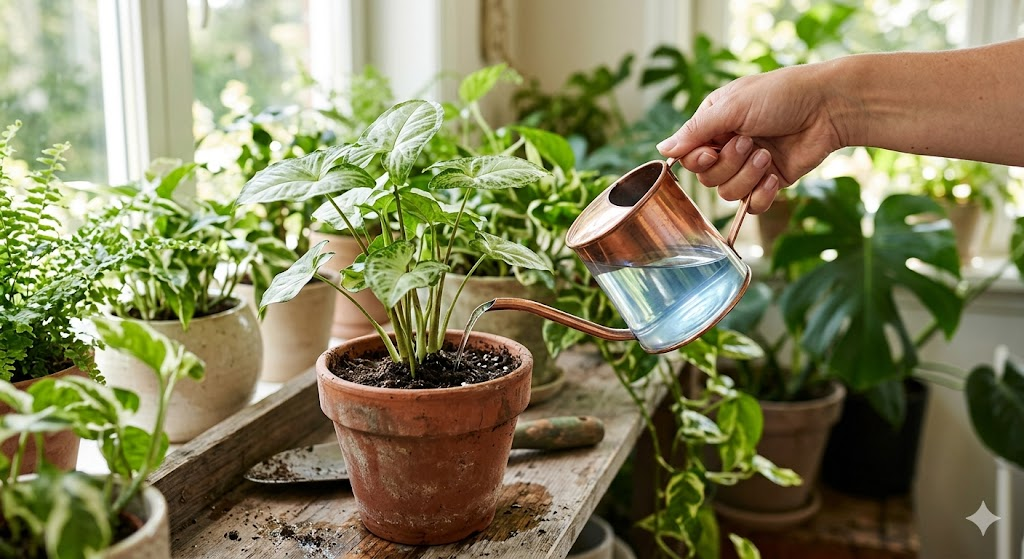
Every three months, I perform a “soil flush.” Even with the best arrowhead plant fertilizer tips, salts from tap water and fertilizers build up in the potting mix. I take my plants to the sink and let room-temperature water run through the soil for several minutes. This “resets” the pH and prevents that dreaded tip-burn. It’s a professional secret that keeps my collection looking showroom-ready.
Summary of the Perfect Routine
To wrap it up, your arrowhead plant fertilizer tips boil down to “less is more.”
- Use a best arrowhead plant fertilizer for indoor settings (liquid is easiest).
- Stick to a 4-6 week arrowhead plant fertilizer frequency.
- Always prioritize arrowhead plant nutrition during the bright summer months.
- Stop everything in the winter.
By following this arrowhead plant fertilizer schedule, you aren’t just keeping a plant alive; you’re helping a tropical piece of art thrive in your home.
Frequently Asked Questions (FAQs)
Can I use coffee grounds as an arrowhead plant fertilizer?
While coffee grounds contain nitrogen, they can be too acidic and may lead to fungal growth if applied directly. It’s better to compost them first or use a dedicated best organic fertilizer for arrowhead plant.
How do I know if my arrowhead plant needs more food?
If it’s the middle of summer and your plant hasn’t produced a new leaf in weeks, or if the new leaves are significantly smaller than the old ones, it’s time to check your arrowhead plant plant food schedule.
Why are the tips of my arrowhead plant turning brown?
This is usually “fertilizer burn” or low humidity. If you’ve recently fertilized, it’s likely a salt buildup. Flush the soil immediately.
What is the best fertilizer for arrowhead plant babies (cuttings)?
For young cuttings with new roots, avoid heavy fertilizers. A very weak (1/4 strength) best arrowhead plant fertilizer for growth or a simple seaweed extract is safest.
For more information on identifying specific species of Syngonium or finding local nurseries, you can search Google for arrowhead plant varieties.
If you’re looking for more advanced tips on soil pH or pest control for your indoor jungle, click here to explore further on Google.