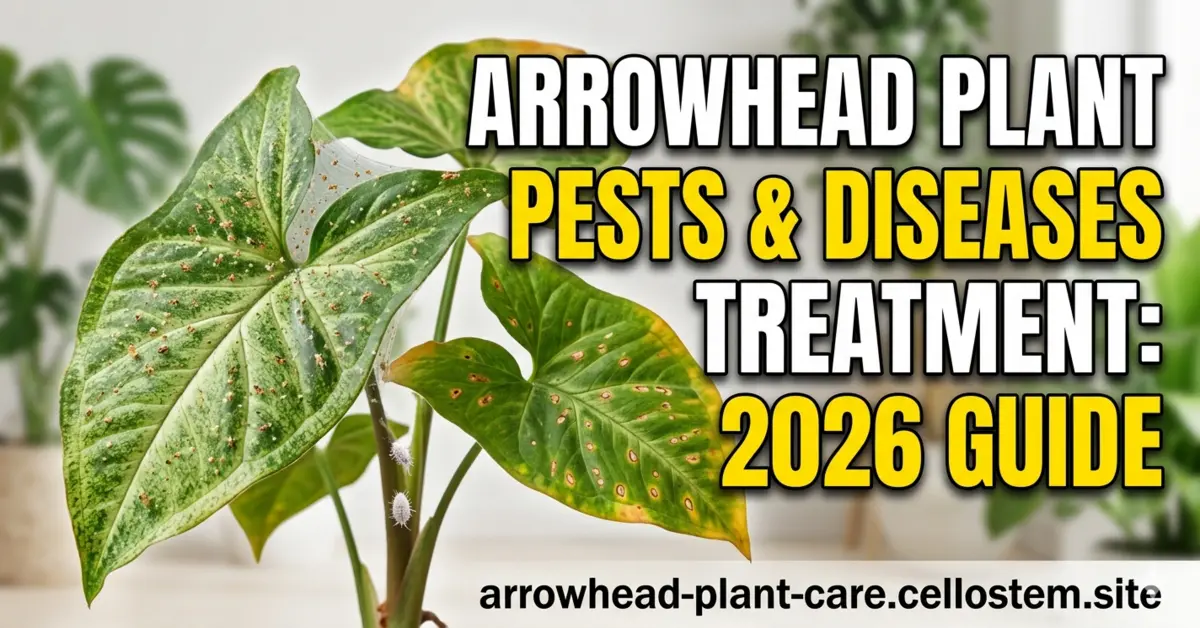
Quick Answer
The best treatment for arrowhead plant pests like spider mites and mealybugs is a thorough spray of neem oil or insecticidal soap. For fungal diseases like root rot, the most effective fix is repotting in a well-draining potting mix (peat, perlite, and pine bark) and reducing water frequency. Always prune infected leaves immediately to stop the spread.
I still remember the first Syngonium podophyllum I ever owned. It was a beautiful ‘White Butterfly’ that I kept on my desk. For months, it was vibrant and lush, but then I noticed the arrowhead plant leaf spot disease creeping across its lower foliage. I made the classic “beginner” mistake: I watered it more, thinking it was thirsty. Within a week, the stems turned mushy. I didn’t just have a leaf spot; I had full-blown arrowhead plant root rot.
That failure taught me more than any textbook ever could. Arrowhead plants are resilient, but they have “tells.” If you know what to look for, you can stop a disaster before it starts. In this guide, I’m sharing the exact strategies I use today to keep my collection thriving, from the best insecticide for arrowhead plant pests to the subtle signs of arrowhead plant yellowing leaves.
Table of Contents
Identifying Common Arrowhead Plant Pests
Before you can treat a problem, you have to know what you’re fighting. In my years of growing, three pests stand out as the most common villains.
1. Spider Mites (The Tiny Web-Weavers)
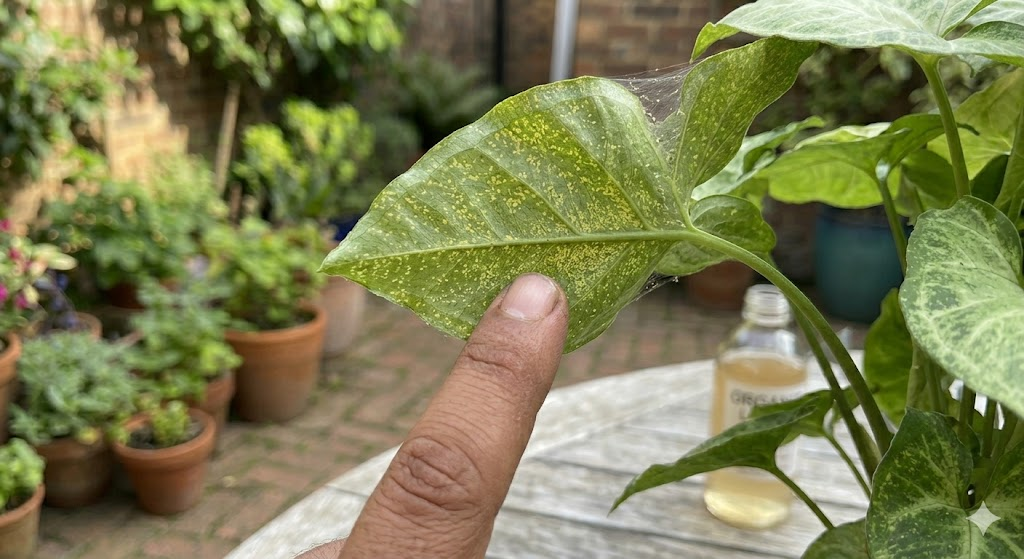
If you see fine, silky webs between the leaf joints or tiny yellow speckles on the foliage, you likely have arrowhead plant spider mites. These guys thrive in dry air. I once lost a rare ‘Albo’ because I kept it too close to a heating vent in the winter.
- The Sign: Pale, washed-out leaves and dusty-looking undersides.
2. Mealybugs (The Cottony Invaders)
These look like small bits of white lint or cotton tucked into the nooks of the stems. Arrowhead plant mealybugs are sap-suckers that can stunt growth and cause leaves to deform.
- The Sign: Sticky residue (honeydew) on the leaves and white, waxy clusters.
3. Scale Insects (The Bumpy Hitchhikers)
Scale is the trickiest to spot because they don’t move. They look like small, brown, or tan oval bumps. I’ve found that the best treatment for arrowhead plant scale involves a mix of physical removal and systemic protection.
- The Sign: Hard, raised bumps that can be scraped off with a fingernail.
The Best Treatments for Pests
When my plants get hit, I follow a three-step escalation process. I start natural and only move to chemicals if the situation is dire.
Best Natural Pest Control for Arrowhead Plant
For most minor issues, I rely on neem oil. It’s the best natural pest control for arrowhead plant because it disrupts the life cycle of mites and mealybugs without harming the plant’s delicate “velvet” texture.
- My Recipe: Mix 1 teaspoon of pure neem oil with 1/2 teaspoon of mild dish soap in a quart of warm water. Spray every 7 days for a month.
The Best Insecticide for Heavy Infestations
If the infestation is widespread, don’t mess around. The best insecticide for arrowhead plant pests is a systemic granule containing Imidacloprid. You sprinkle it on the soil, and the plant absorbs it. When a bug bites the leaf, it’s game over. Note: Only use this for indoor plants to protect our outdoor bee populations.
Solving Arrowhead Plant Diseases
Diseases in Syngoniums are almost always tied to two things: water and airflow.
Dealing with Root Rot
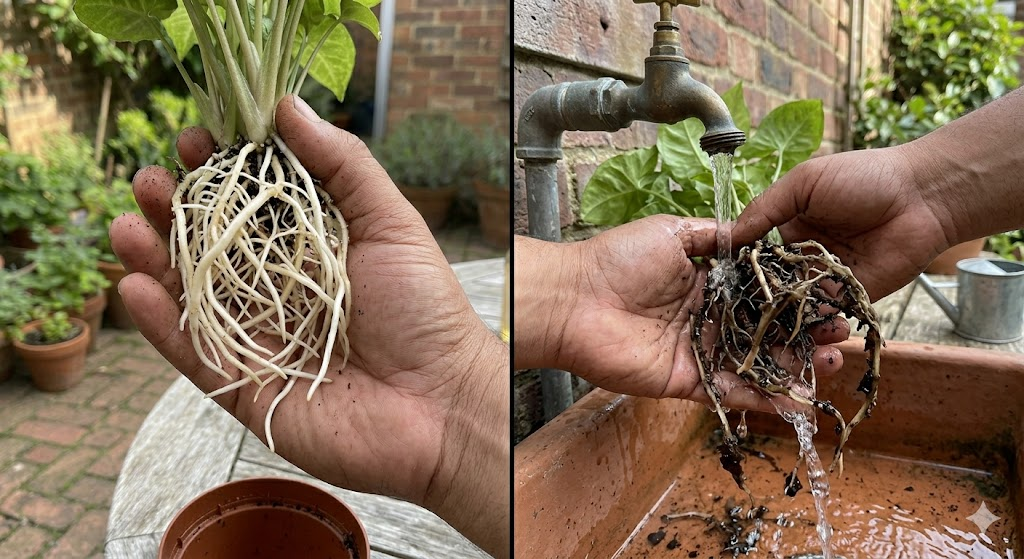
Arrowhead plant root rot is the #1 killer. I’ve learned that a foul, swampy smell coming from the soil is the point of no return. If you see arrowhead plant yellowing leaves that feel soft rather than crispy, check the roots immediately. Healthy roots are white and firm; rotting roots are brown, slimy, and fall apart.
Treating Leaf Spot Disease
Arrowhead plant leaf spot disease (fungal or bacterial) usually shows up as brown circles with a yellow “halo.” I once had an outbreak after misting my plants too much without enough air circulation.
- The Fix: Use the best fungicide for arrowhead plant diseases, which is typically a copper-based spray. It stops the spores from spreading to new growth.
Prevention: The “Golden Trio” of Care
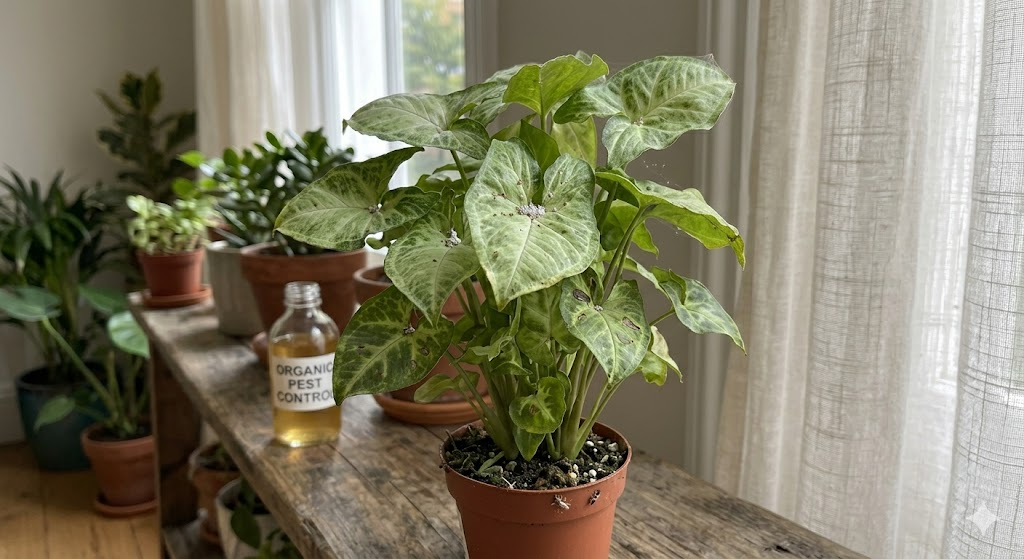
The best “treatment” is never needing one. Through a decade of trial and error, I’ve found that these three elements prevent 90% of all Syngonium problems.
1. The Right Soil and Pot
Using the best soil for arrowhead plant to prevent root rot is non-negotiable. I stopped using standard “all-purpose” potting soil years ago. It stays wet for too long.
- Pro Mix: 50% peat or coco coir, 25% perlite, and 25% orchid bark.
- The Pot: The best pot for arrowhead plant drainage is a terracotta pot or a plastic nursery pot with at least 4-5 large drainage holes. Never let your plant sit in a decorative “cache” pot full of standing water.
2. Strategic Watering and Nutrition
What kind of water are you using? I noticed my ‘Pink Allusion’ developed arrowhead plant brown tips when I used cold tap water straight from the sink. The best water for arrowhead plant to avoid leaf spots and tip burn is filtered or distilled water at room temperature.
For energy, use the best fertilizer for arrowhead plant health—a balanced, water-soluble 10-10-10 NPK ratio. I fertilize at half-strength once every two weeks during the summer. This keeps the cell walls strong, making it harder for pests like thrips to pierce the leaves.
3. Light and Humidity
Low light leads to arrowhead plant yellowing leaves and “leggy” stems. I keep mine in bright, indirect light. If you want to dive deeper into the science of plant light, you can search Google for light intensity for tropical plants.
Professional Troubleshooting Tips
Here is the “insider” advice you won’t find in a basic care tag:
- The “Taco” Test: If your arrowhead leaves are curling inward like a taco, it’s not always pests. It often means the humidity is below 40%. Use a pebble tray or a small humidifier to bring it up.
- Isolation is Key: Whenever I bring a new Syngonium home, I “quarantine” it in the bathroom for two weeks. I once skipped this and ended up with a house-wide scale infestation.
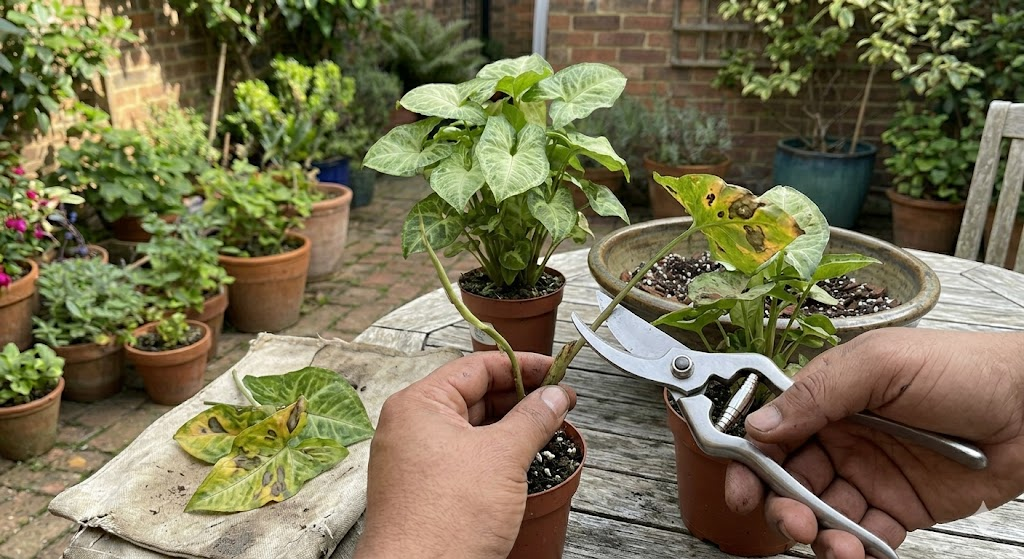
- Pruning for Health: Don’t be afraid to cut. If a vine is covered in arrowhead plant brown tips, snip it back to a healthy node. It redirects energy to the roots and new, pest-resistant growth.
Summary Table: Treatments at a Glance
| Issue | Identification | Best Treatment |
| Spider Mites | Fine webs, dusty leaves | Neem oil + increased humidity |
| Mealybugs | White cottony tufts | Alcohol swab + Insecticidal soap |
| Scale | Hard brown bumps | Manual scraping + Systemic granules |
| Root Rot | Mushy stems, yellowing | Repot in airy soil + Cut rotten roots |
| Leaf Spot | Brown spots with yellow halos | Copper fungicide + Improved airflow |
Final Thoughts
Caring for an arrowhead plant is a journey of observation. I still lose a leaf here and there, but I no longer panic. By using the best natural pest control for arrowhead plant and staying vigilant for arrowhead plant pest identification signals, you can keep these tropical beauties growing for decades.
Remember, a plant that is stressed by poor light or bad water is a magnet for bugs. Keep your Syngonium happy, and it will largely take care of itself. If you’re looking for more specific plant varieties, you can browse Google for Syngonium varieties and care.
FAQs
What is the fastest way to get rid of bugs on my arrowhead plant?
The fastest physical way is to take the plant to the shower and blast the leaves with lukewarm water to knock off pests. Follow up with an application of insecticidal soap.
Why are my arrowhead plant leaves turning yellow?
This is usually a sign of overwatering or arrowhead plant root rot. Check the soil; if it’s soggy, let it dry out completely and check the roots for mushiness.
Is neem oil safe for all Syngonium varieties?
Generally, yes. However, very variegated (white) parts of the leaf can be sensitive to oil and “burn” if placed in direct sun after treatment. Always spray in the evening.
How often should I check for pests?
I recommend a “foliage flip” once a week. Look at the undersides of the leaves—that’s where 90% of pests hide.
Can I use tap water for my arrowhead plant?
You can, but if your tap water is “hard” or contains high chlorine, you may see arrowhead plant brown tips. Using filtered water or letting tap water sit out for 24 hours helps.
Thank You for visiting Our Website https://arrowhead-plant-care.celltostem.site/